Not every marketing goal should tie to pipeline. Learn to set motion-specific goals for brand, demand, and expand that reflect real ownership.

Evan Hughes
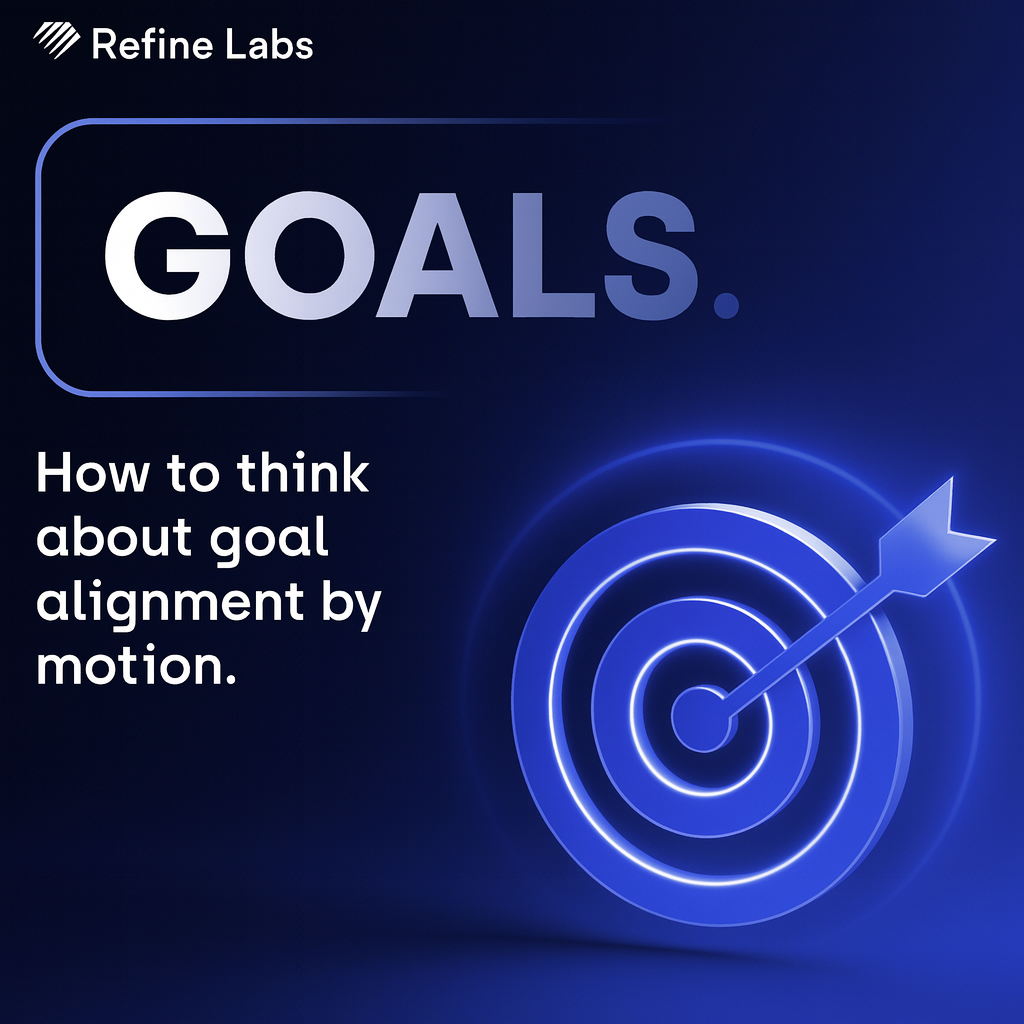
Stop setting the same goals for every motion. Not everything should be measured in pipeline.
Most teams set goals like this: "We need to drive more pipeline. Here’s the number. Work backward."
On paper, it sounds fine. But in practice, it falls apart.Because not every part of marketing is built to deliver pipeline in 30, 60, or even 90 days.
Brand takes time.
Expand plays out over quarters.
Even demand, depending on your cycle, might not show up the way leadership expects.
But the pressure for marketers is always the same:
"Show impact."
"Show ROI."
"Show results."
And when every motion is measured like it should drive revenue tomorrow, you either make bad decisions or spend most of your time defending the right ones.
At Refine Labs, we’ve been guilty of this too.
We’d say brand matters, but set goals that only looked at form fills.
We’d run random expand initiatives, but not build them into our planning cycle.
And demand? That was always the default when things got tight. But first thing to pull back on when priorities shift.
So heading into 2025, we started talking about and building goals around what each motion might be responsible for.
Better said, this isn’t about doing less. It’s about setting expectations that didn't set up our team up to fail. Or burn out.
We don’t try to hold everything to the same metric anymore.
Here’s how we break it down:
Brand
The goal isn’t conversion. The goal is awareness, memory, and trust.
We track things like:
If these are moving, demand gets easier. That’s the signal.
Demand
This is where pipeline actually lives. But pipeline alone isn’t the goal.
We look at:
If leads are up but deals aren’t closing, that tells us something isn’t landing. The intent might not be there, or the targeting is off, or the offer is too generic.
Expand
The goal here is to keep customers and grow them.
This doesn’t show up in MQLs or campaign dashboards.
We look at:
This is new for us, and we’re still getting better at tracking it. But we’re building in syncs between marketing, service-delivery leadership to make sure we’re supporting growth, not just acquisition. We'll get there. But it takes time!
If you’re heading into planning and want to build better targets, here’s a quick framework we’re using now.
Brand might be about increased recall or positioning consistency.
Demand might be about improving win rate, not just volume.
Expand might be about reducing churn from specific cohorts.
Don’t let your OKRs or KPIs lie to you.
If brand is doing its job, you won’t see it all in Salesforce.
If demand is being measured by MQLs, you’ll end up chasing volume instead of revenue.
If expand isn’t in your planning, you’ll spend more time replacing revenue than growing it.
Your team needs clarity, not just targets.
You can have aggressive goals. But they have to make sense for what each motion is actually built to do.
We’re using this inside Refine Labs now as part of our 2026 planning reset.
And it’s already helping our teams get out of the cycle of proving impact too fast and into a rhythm that supports long-term results.
If you want your marketing to work, the goals have to work first.
----------
Refine Labs is the leading B2B demand generation agency that has helped over 300+ B2B companies accelerate revenue growth and improve marketing ROI with innovative marketing strategies.
Learn more at www.refinelabs.com. Connect with us on LinkedIn and YouTube.
Listen to our Podcast with weekly episodes Stacking Growth.
Keep reading